



Ternovy Pody is a small village in the Mykolaiv region, where today life thrives in only four houses. The rest of the village is made up of damaged walls and minefields.


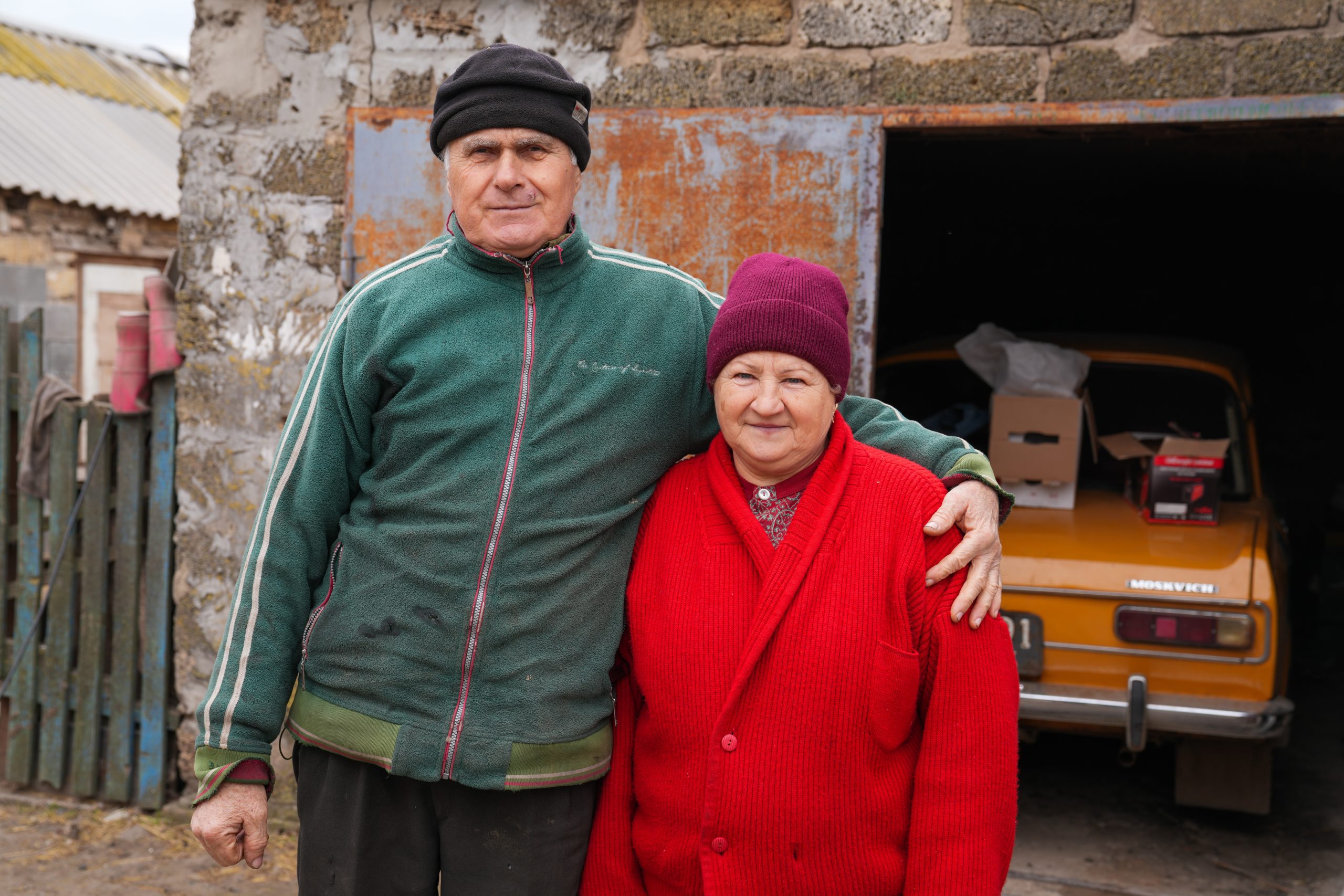
Specialists from the Shchedryk Foundation and ZOA visited the family of Viktor and his wife to hear the story of people who, despite being wounded, occupied, and losing their farms, returned home to “put the village back on its feet.”
Viktor is an avid beekeeper. Even during fierce battles, he could not leave his bees. One of the arrivals occurred right at the apiary.

“I was just near the farthest hive, working. The shell exploded not far from me. It shook a lot… In Frankivsk, I had an eye operation later, my back was all cut up. I lost my vision,” Viktor recalls.Після евакуації та лікування чоловік не зміг залишатися в тилу. Каже: «Свою землю шкода лишити. Хочу тут працювати й розвиватися».
“Bayraktar” and “Bayraktarsha”

Before the Great War, the family had 8 cows. When the invasion began, the cattle were calving under shelling. The two calves were symbolically named Bayraktar and Bayraktarsha.
Viktor’s wife painfully recalls the moment of evacuation. She did not want to leave, “howling like a wolf” because she could not leave the farm. When the family finally returned home, they were met by only one cow, which miraculously survived. She was so frightened that at any noise she would fall silent and run into the barn.
Today, the family is again “growing” the farm. After returning, the woman tried to keep goats, but says that her soul is in great need of hard work.

“I took two cows, and it went from strength to strength. Now there are thirteen heads, including the young. I can’t stop!” she laughs.
Every Friday, the couple goes to the Mykolaiv Kolos market to sell homemade cheese and milk. This is their work, their life, and their contribution to the restoration of their native land.

The role of “Shchedryk” in the revival
Mykolaiv nature has always allowed us not to buy feed, but the war burned down pastures and plantings. While the land is being reborn, the Shchedryk NGO, together with partners ZOA and the Ukraine Humanitarian Fund (UHF), financially supported the family by providing $1,000 so that the couple could purchase feed for their livestock and attachments for their walk-behind tractor.

“We’ve already bought food ourselves three times because everything burned down. But the fact that you helped us — thank you very much, it’s a great support,” says Victor.
PHOTO REPORT